•  
10-time Olympic skating medalist Takagi given People's Honor Award

10-time Olympic skating medalist Takagi given People's Honor Award

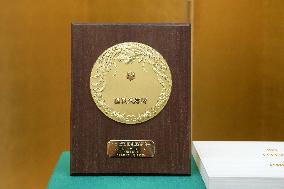
Photo taken on Aug. 4, 2026, shows a plaque to be given to 10-time Olympic speed skating medalist Miho Takagi at a ceremony to confer the People's Honor Award at the prime minister's office in Tokyo later in the day. Each of the knives is engraved with her name and the award title. The four-time Olympian, 32, won two gold, four silver and four bronze medals before announcing her retirement in April.

  •  
10-time Olympic skating medalist Takagi given People's Honor Award

10-time Olympic skating medalist Takagi given People's Honor Award

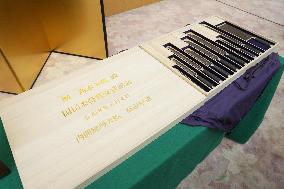
Photo taken on Aug. 4, 2026, shows a commemorative set of 10 cooking knives to be given to 10-time Olympic speed skating medalist Miho Takagi during a ceremony to confer the People's Honor Award at the prime minister's office in Tokyo later in the day. Each of the knives is engraved with her name and the award title, as the 32-year old won two gold, four silver and four bronze medals before announcing her retirement in April.

  •  
10-time Olympic skating medalist Takagi given People's Honor Award

10-time Olympic skating medalist Takagi given People's Honor Award

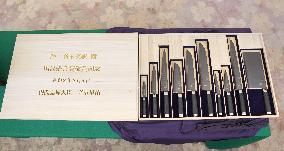
Photo taken on Aug. 4, 2026, shows a commemorative set of 10 cooking knives to be given to 10-time Olympic speed skating medalist Miho Takagi during a ceremony to confer the People's Honor Award at the prime minister's office in Tokyo later in the day. Each of the knives is engraved with her name and the award title, as the 32-year old won two gold, four silver and four bronze medals before announcing her retirement in April.

  •  
10-time Olympic skating medalist Takagi given People's Honor Award

10-time Olympic skating medalist Takagi given People's Honor Award

Photo taken on Aug. 4, 2026, shows a commemorative set of 10 cooking knives to be given to 10-time Olympic speed skating medalist Miho Takagi during a ceremony to confer the People's Honor Award at the prime minister's office in Tokyo later in the day. Each of the knives is engraved with her name and the award title, as the 32-year old won two gold, four silver and four bronze medals before announcing her retirement in April.

  •  
10-time Olympic skating medalist Takagi given People's Honor Award

10-time Olympic skating medalist Takagi given People's Honor Award

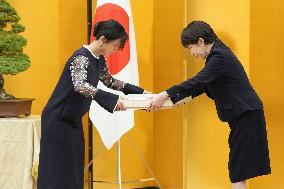
Ten-time Olympic speed skating medalist Miho Takagi (L) poses with Prime Minister Sanae Takaichi as she receives a commemorative set of 10 cooking knives during a ceremony to confer the People's Honor Award at the premier's office in Tokyo on Aug. 4, 2026. Each of the knives is engraved with her name and the award title, as the 32-year old won two gold, four silver and four bronze medals before announcing her retirement in April.

  •  
10-time Olympic skating medalist Takagi given People's Honor Award

10-time Olympic skating medalist Takagi given People's Honor Award

Ten-time Olympic speed skating medalist Miho Takagi (L) receives a commemorative set of 10 cooking knives from Prime Minister Sanae Takaichi during a ceremony to confer the People's Honor Award at the premier's office in Tokyo on Aug. 4, 2026. Each of the knives is engraved with her name and the award title, as the 32-year old won two gold, four silver and four bronze medals before announcing her retirement in April.

  •  
10-time Olympic skating medalist Takagi given People's Honor Award

10-time Olympic skating medalist Takagi given People's Honor Award

Ten-time Olympic speed skating medalist Miho Takagi (L) receives a commemorative set of 10 cooking knives from Prime Minister Sanae Takaichi during a ceremony to confer the People's Honor Award at the premier's office in Tokyo on Aug. 4, 2026. Each of the knives is engraved with her name and the award title, as the 32-year old won two gold, four silver and four bronze medals before announcing her retirement in April.

  •  

China: Typhoon Bavi Rips Metal Roof Off Residential Building in Shanghai

Typhoon Bavi tore the metal roof off a residential building in Chongming District, Shanghai on July 12, 2026, with footage showing the structure shaking violently before being ripped apart and blown to the ground by powerful gusts.

  •  
RUSSIA-ROSTOV-HOSTAGE-TAKING ATTEMPT-FOILED

RUSSIA-ROSTOV-HOSTAGE-TAKING ATTEMPT-FOILED

(240617) -- ROSTOV, June 17, 2024 Photo by Xinhua/ABACAPRESS.COM) -- Police officers work at the site of a hostage-taking incident in Rostov region, Russia, June 16, 2024. Russian penitentiary authorities foiled an attempt to take hostages in the south-western Rostov region, the TASS news agency reported Sunday. During a special operation to free the hostages at a pre-trial detention center in the region, the criminals armed with knives have been eliminated, and two employees held hostage were released and safe, Russia's Federal Penitentiary Service said in a statement. During negotiations, the law enforcement launched the release operation, and now the situation is under control at the center, said the service. (Photo by Vladimir Sergeev/Xinhua/ABACAPRESS.COM

  •  
RUSSIA-ROSTOV-HOSTAGE-TAKING ATTEMPT-FOILED

RUSSIA-ROSTOV-HOSTAGE-TAKING ATTEMPT-FOILED

(240617) -- ROSTOV, June 17, 2024 Photo by Xinhua/ABACAPRESS.COM) -- Police officers and vehicles are pictured at the site of a hostage-taking incident in Rostov region, Russia, June 16, 2024. Russian penitentiary authorities foiled an attempt to take hostages in the south-western Rostov region, the TASS news agency reported Sunday. During a special operation to free the hostages at a pre-trial detention center in the region, the criminals armed with knives have been eliminated, and two employees held hostage were released and safe, Russia's Federal Penitentiary Service said in a statement. During negotiations, the law enforcement launched the release operation, and now the situation is under control at the center, said the service. (Photo by Vladimir Sergeev/Xinhua/ABACAPRESS.COM

  •  
RUSSIA-ROSTOV-HOSTAGE-TAKING ATTEMPT-FOILED

RUSSIA-ROSTOV-HOSTAGE-TAKING ATTEMPT-FOILED

(240617) -- ROSTOV, June 17, 2024 Photo by Xinhua/ABACAPRESS.COM) -- Police officers are pictured at the site of a hostage-taking incident in Rostov region, Russia, June 16, 2024. Russian penitentiary authorities foiled an attempt to take hostages in the south-western Rostov region, the TASS news agency reported Sunday. During a special operation to free the hostages at a pre-trial detention center in the region, the criminals armed with knives have been eliminated, and two employees held hostage were released and safe, Russia's Federal Penitentiary Service said in a statement. During negotiations, the law enforcement launched the release operation, and now the situation is under control at the center, said the service. (Photo by Vladimir Sergeev/Xinhua/ABACAPRESS.COM

  •  
RUSSIA-ROSTOV-HOSTAGE-TAKING ATTEMPT-FOILED

RUSSIA-ROSTOV-HOSTAGE-TAKING ATTEMPT-FOILED

(240617) -- ROSTOV, June 17, 2024 (Xinhua) -- Police officers are pictured at the site of a hostage-taking incident in Rostov region, Russia, June 16, 2024. Russian penitentiary authorities foiled an attempt to take hostages in the south-western Rostov region, the TASS news agency reported Sunday. During a special operation to free the hostages at a pre-trial detention center in the region, the criminals armed with knives have been eliminated, and two employees held hostage were released and safe, Russia's Federal Penitentiary Service said in a statement. During negotiations, the law enforcement launched the release operation, and now the situation is under control at the center, said the service. (Photo by Vladimir Sergeev/Xinhua)

  •  
RUSSIA-ROSTOV-HOSTAGE-TAKING ATTEMPT-FOILED

RUSSIA-ROSTOV-HOSTAGE-TAKING ATTEMPT-FOILED

(240617) -- ROSTOV, June 17, 2024 (Xinhua) -- Police officers and vehicles are pictured at the site of a hostage-taking incident in Rostov region, Russia, June 16, 2024. Russian penitentiary authorities foiled an attempt to take hostages in the south-western Rostov region, the TASS news agency reported Sunday. During a special operation to free the hostages at a pre-trial detention center in the region, the criminals armed with knives have been eliminated, and two employees held hostage were released and safe, Russia's Federal Penitentiary Service said in a statement. During negotiations, the law enforcement launched the release operation, and now the situation is under control at the center, said the service. (Photo by Vladimir Sergeev/Xinhua)

  •  
RUSSIA-ROSTOV-HOSTAGE-TAKING ATTEMPT-FOILED

RUSSIA-ROSTOV-HOSTAGE-TAKING ATTEMPT-FOILED

(240617) -- ROSTOV, June 17, 2024 (Xinhua) -- Police officers work at the site of a hostage-taking incident in Rostov region, Russia, June 16, 2024. Russian penitentiary authorities foiled an attempt to take hostages in the south-western Rostov region, the TASS news agency reported Sunday. During a special operation to free the hostages at a pre-trial detention center in the region, the criminals armed with knives have been eliminated, and two employees held hostage were released and safe, Russia's Federal Penitentiary Service said in a statement. During negotiations, the law enforcement launched the release operation, and now the situation is under control at the center, said the service. (Photo by Vladimir Sergeev/Xinhua)

  •  
(MASTER OF CRAFTS)CHINA-CARVED LACQUER-INHERITOR-STUDIO (CN)

(MASTER OF CRAFTS)CHINA-CARVED LACQUER-INHERITOR-STUDIO (CN)

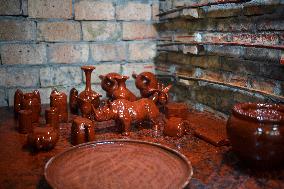
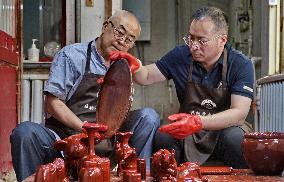
(240607) -- BEIJING, June 7, 2024 Photo by Xinhua/ABACAPRESS.COM) -- Zhu Jiang (L) and his father carry semi-finished carved lacquer wares for drying at his studio in Gu'an, north China's Hebei Province, May 30, 2024. Carved lacquer, dating back to the Tang Dynasty (618-907), greeted its peak time in Ming and Qing dynasties (1368-1911). Since the founding of the People's Republic of China in 1949, Beijing and Yangzhou have become the two centers for the craft of carved lacquer, which was listed as a national-level intangible cultural heritage in 2006. Carved lacquer differs in its colors, namely red, black or multiple colors. Its making procedures include designing, body shaping, lacquer making, coating, drawing, carving and grinding. The craftsman needs to smoothly use various kinds of knives to carve patterns on the ware, and even a little miss can destroy the whole artwork. The craft can only be grasped through three to five years of practice. Therefore, it is also called "the art of time." Born in 1976, Z

  •  
(MASTER OF CRAFTS)CHINA-CARVED LACQUER-INHERITOR-STUDIO (CN)

(MASTER OF CRAFTS)CHINA-CARVED LACQUER-INHERITOR-STUDIO (CN)

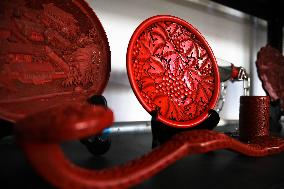
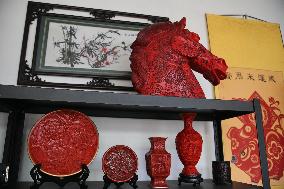
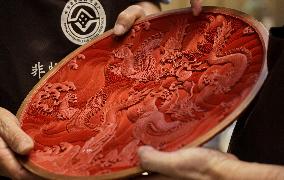
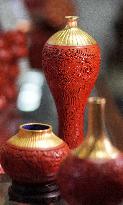
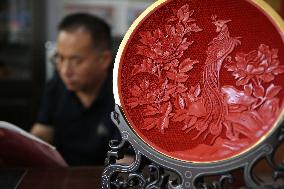
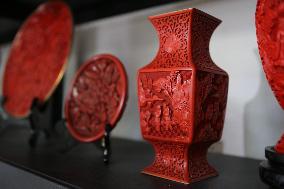
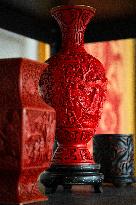
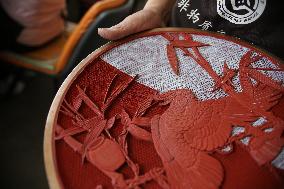
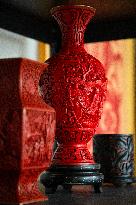
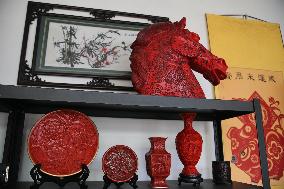
(240607) -- BEIJING, June 7, 2024 Photo by Xinhua/ABACAPRESS.COM) -- Carved lacquer artworks are displayed at Zhu Jiang's studio in Gu'an, north China's Hebei Province, May 30, 2024. Carved lacquer, dating back to the Tang Dynasty (618-907), greeted its peak time in Ming and Qing dynasties (1368-1911). Since the founding of the People's Republic of China in 1949, Beijing and Yangzhou have become the two centers for the craft of carved lacquer, which was listed as a national-level intangible cultural heritage in 2006. Carved lacquer differs in its colors, namely red, black or multiple colors. Its making procedures include designing, body shaping, lacquer making, coating, drawing, carving and grinding. The craftsman needs to smoothly use various kinds of knives to carve patterns on the ware, and even a little miss can destroy the whole artwork. The craft can only be grasped through three to five years of practice. Therefore, it is also called "the art of time." Born in 1976, Zhu Jiang, an inheritor of the craft

  •  
(MASTER OF CRAFTS)CHINA-CARVED LACQUER-INHERITOR-STUDIO (CN)

(MASTER OF CRAFTS)CHINA-CARVED LACQUER-INHERITOR-STUDIO (CN)

(240607) -- BEIJING, June 7, 2024 Photo by Xinhua/ABACAPRESS.COM) -- Carved lacquer artworks are displayed at Zhu Jiang's studio in Gu'an, north China's Hebei Province, May 30, 2024. Carved lacquer, dating back to the Tang Dynasty (618-907), greeted its peak time in Ming and Qing dynasties (1368-1911). Since the founding of the People's Republic of China in 1949, Beijing and Yangzhou have become the two centers for the craft of carved lacquer, which was listed as a national-level intangible cultural heritage in 2006. Carved lacquer differs in its colors, namely red, black or multiple colors. Its making procedures include designing, body shaping, lacquer making, coating, drawing, carving and grinding. The craftsman needs to smoothly use various kinds of knives to carve patterns on the ware, and even a little miss can destroy the whole artwork. The craft can only be grasped through three to five years of practice. Therefore, it is also called "the art of time." Born in 1976, Zhu Jiang, an inheritor of the craft

  •  
(MASTER OF CRAFTS)CHINA-CARVED LACQUER-INHERITOR-STUDIO (CN)

(MASTER OF CRAFTS)CHINA-CARVED LACQUER-INHERITOR-STUDIO (CN)

(240607) -- BEIJING, June 7, 2024 Photo by Xinhua/ABACAPRESS.COM) -- Carved lacquer artworks are displayed at Zhu Jiang's studio in Gu'an, north China's Hebei Province, May 30, 2024. Carved lacquer, dating back to the Tang Dynasty (618-907), greeted its peak time in Ming and Qing dynasties (1368-1911). Since the founding of the People's Republic of China in 1949, Beijing and Yangzhou have become the two centers for the craft of carved lacquer, which was listed as a national-level intangible cultural heritage in 2006. Carved lacquer differs in its colors, namely red, black or multiple colors. Its making procedures include designing, body shaping, lacquer making, coating, drawing, carving and grinding. The craftsman needs to smoothly use various kinds of knives to carve patterns on the ware, and even a little miss can destroy the whole artwork. The craft can only be grasped through three to five years of practice. Therefore, it is also called "the art of time." Born in 1976, Zhu Jiang, an inheritor of the craft

  •  
(MASTER OF CRAFTS)CHINA-CARVED LACQUER-INHERITOR-STUDIO (CN)

(MASTER OF CRAFTS)CHINA-CARVED LACQUER-INHERITOR-STUDIO (CN)

(240607) -- BEIJING, June 7, 2024 Photo by Xinhua/ABACAPRESS.COM) -- A piece of carved lacquer artwork on drying is displayed at Zhu Jiang's studio in Gu'an, north China's Hebei Province, May 30, 2024. Carved lacquer, dating back to the Tang Dynasty (618-907), greeted its peak time in Ming and Qing dynasties (1368-1911). Since the founding of the People's Republic of China in 1949, Beijing and Yangzhou have become the two centers for the craft of carved lacquer, which was listed as a national-level intangible cultural heritage in 2006. Carved lacquer differs in its colors, namely red, black or multiple colors. Its making procedures include designing, body shaping, lacquer making, coating, drawing, carving and grinding. The craftsman needs to smoothly use various kinds of knives to carve patterns on the ware, and even a little miss can destroy the whole artwork. The craft can only be grasped through three to five years of practice. Therefore, it is also called "the art of time." Born in 1976, Zhu Jiang, an inh

  •  
(MASTER OF CRAFTS)CHINA-CARVED LACQUER-INHERITOR-STUDIO (CN)

(MASTER OF CRAFTS)CHINA-CARVED LACQUER-INHERITOR-STUDIO (CN)

(240607) -- BEIJING, June 7, 2024 Photo by Xinhua/ABACAPRESS.COM) -- Carved lacquer artworks are displayed at Zhu Jiang's studio in Gu'an, north China's Hebei Province, May 30, 2024. Carved lacquer, dating back to the Tang Dynasty (618-907), greeted its peak time in Ming and Qing dynasties (1368-1911). Since the founding of the People's Republic of China in 1949, Beijing and Yangzhou have become the two centers for the craft of carved lacquer, which was listed as a national-level intangible cultural heritage in 2006. Carved lacquer differs in its colors, namely red, black or multiple colors. Its making procedures include designing, body shaping, lacquer making, coating, drawing, carving and grinding. The craftsman needs to smoothly use various kinds of knives to carve patterns on the ware, and even a little miss can destroy the whole artwork. The craft can only be grasped through three to five years of practice. Therefore, it is also called "the art of time." Born in 1976, Zhu Jiang, an inheritor of the craft

  •  
(MASTER OF CRAFTS)CHINA-CARVED LACQUER-INHERITOR-STUDIO (CN)

(MASTER OF CRAFTS)CHINA-CARVED LACQUER-INHERITOR-STUDIO (CN)

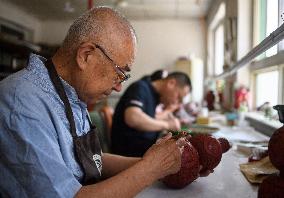
(240607) -- BEIJING, June 7, 2024 Photo by Xinhua/ABACAPRESS.COM) -- Semi-finished carved lacquer artworks are seen on drying at Zhu Jiang's studio in Gu'an, north China's Hebei Province, May 30, 2024. Carved lacquer, dating back to the Tang Dynasty (618-907), greeted its peak time in Ming and Qing dynasties (1368-1911). Since the founding of the People's Republic of China in 1949, Beijing and Yangzhou have become the two centers for the craft of carved lacquer, which was listed as a national-level intangible cultural heritage in 2006. Carved lacquer differs in its colors, namely red, black or multiple colors. Its making procedures include designing, body shaping, lacquer making, coating, drawing, carving and grinding. The craftsman needs to smoothly use various kinds of knives to carve patterns on the ware, and even a little miss can destroy the whole artwork. The craft can only be grasped through three to five years of practice. Therefore, it is also called "the art of time." Born in 1976, Zhu Jiang, an inh

  •  
(MASTER OF CRAFTS)CHINA-CARVED LACQUER-INHERITOR-STUDIO (CN)

(MASTER OF CRAFTS)CHINA-CARVED LACQUER-INHERITOR-STUDIO (CN)

(240607) -- BEIJING, June 7, 2024 Photo by Xinhua/ABACAPRESS.COM) -- Carved lacquer artworks are displayed at Zhu Jiang's studio in Beijing, capital of China, June 5, 2024. Carved lacquer, dating back to the Tang Dynasty (618-907), greeted its peak time in Ming and Qing dynasties (1368-1911). Since the founding of the People's Republic of China in 1949, Beijing and Yangzhou have become the two centers for the craft of carved lacquer, which was listed as a national-level intangible cultural heritage in 2006. Carved lacquer differs in its colors, namely red, black or multiple colors. Its making procedures include designing, body shaping, lacquer making, coating, drawing, carving and grinding. The craftsman needs to smoothly use various kinds of knives to carve patterns on the ware, and even a little miss can destroy the whole artwork. The craft can only be grasped through three to five years of practice. Therefore, it is also called "the art of time." Born in 1976, Zhu Jiang, an inheritor of the craft of carved

  •  
(MASTER OF CRAFTS)CHINA-CARVED LACQUER-INHERITOR-STUDIO (CN)

(MASTER OF CRAFTS)CHINA-CARVED LACQUER-INHERITOR-STUDIO (CN)

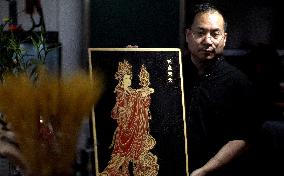
(240607) -- BEIJING, June 7, 2024 Photo by Xinhua/ABACAPRESS.COM) -- Zhu Jiang shows a piece of colorful carved lacquer artwork at his studio in Beijing, capital of China, June 5, 2024. Carved lacquer, dating back to the Tang Dynasty (618-907), greeted its peak time in Ming and Qing dynasties (1368-1911). Since the founding of the People's Republic of China in 1949, Beijing and Yangzhou have become the two centers for the craft of carved lacquer, which was listed as a national-level intangible cultural heritage in 2006. Carved lacquer differs in its colors, namely red, black or multiple colors. Its making procedures include designing, body shaping, lacquer making, coating, drawing, carving and grinding. The craftsman needs to smoothly use various kinds of knives to carve patterns on the ware, and even a little miss can destroy the whole artwork. The craft can only be grasped through three to five years of practice. Therefore, it is also called "the art of time." Born in 1976, Zhu Jiang, an inheritor of the cr

  •  
(MASTER OF CRAFTS)CHINA-CARVED LACQUER-INHERITOR-STUDIO (CN)

(MASTER OF CRAFTS)CHINA-CARVED LACQUER-INHERITOR-STUDIO (CN)

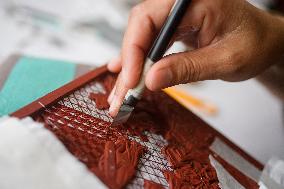
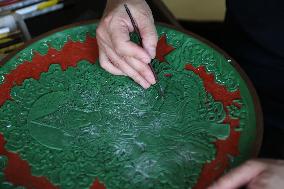
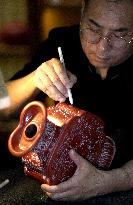
(240607) -- BEIJING, June 7, 2024 Photo by Xinhua/ABACAPRESS.COM) -- Zhu Jiang makes carved lacquer at his studio in Gu'an, north China's Hebei Province, May 30, 2024. Carved lacquer, dating back to the Tang Dynasty (618-907), greeted its peak time in Ming and Qing dynasties (1368-1911). Since the founding of the People's Republic of China in 1949, Beijing and Yangzhou have become the two centers for the craft of carved lacquer, which was listed as a national-level intangible cultural heritage in 2006. Carved lacquer differs in its colors, namely red, black or multiple colors. Its making procedures include designing, body shaping, lacquer making, coating, drawing, carving and grinding. The craftsman needs to smoothly use various kinds of knives to carve patterns on the ware, and even a little miss can destroy the whole artwork. The craft can only be grasped through three to five years of practice. Therefore, it is also called "the art of time." Born in 1976, Zhu Jiang, an inheritor of the craft of carved lacq

  •  
(MASTER OF CRAFTS)CHINA-CARVED LACQUER-INHERITOR-STUDIO (CN)

(MASTER OF CRAFTS)CHINA-CARVED LACQUER-INHERITOR-STUDIO (CN)

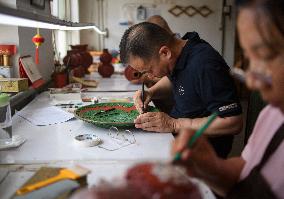
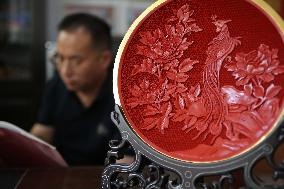
(240607) -- BEIJING, June 7, 2024 Photo by Xinhua/ABACAPRESS.COM) -- Zhu Jiang reads a book on carved lacquer at his studio in Gu'an, north China's Hebei Province, May 30, 2024. Carved lacquer, dating back to the Tang Dynasty (618-907), greeted its peak time in Ming and Qing dynasties (1368-1911). Since the founding of the People's Republic of China in 1949, Beijing and Yangzhou have become the two centers for the craft of carved lacquer, which was listed as a national-level intangible cultural heritage in 2006. Carved lacquer differs in its colors, namely red, black or multiple colors. Its making procedures include designing, body shaping, lacquer making, coating, drawing, carving and grinding. The craftsman needs to smoothly use various kinds of knives to carve patterns on the ware, and even a little miss can destroy the whole artwork. The craft can only be grasped through three to five years of practice. Therefore, it is also called "the art of time." Born in 1976, Zhu Jiang, an inheritor of the craft of c

  •  
(MASTER OF CRAFTS)CHINA-CARVED LACQUER-INHERITOR-STUDIO (CN)

(MASTER OF CRAFTS)CHINA-CARVED LACQUER-INHERITOR-STUDIO (CN)

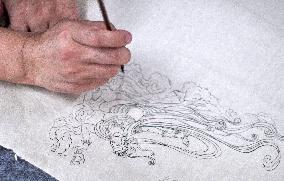
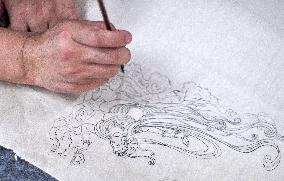
(240607) -- BEIJING, June 7, 2024 Photo by Xinhua/ABACAPRESS.COM) -- Zhu Jiang designs a piece of carved lacquer artwork at his studio in Beijing, capital of China, June 5, 2024. Carved lacquer, dating back to the Tang Dynasty (618-907), greeted its peak time in Ming and Qing dynasties (1368-1911). Since the founding of the People's Republic of China in 1949, Beijing and Yangzhou have become the two centers for the craft of carved lacquer, which was listed as a national-level intangible cultural heritage in 2006. Carved lacquer differs in its colors, namely red, black or multiple colors. Its making procedures include designing, body shaping, lacquer making, coating, drawing, carving and grinding. The craftsman needs to smoothly use various kinds of knives to carve patterns on the ware, and even a little miss can destroy the whole artwork. The craft can only be grasped through three to five years of practice. Therefore, it is also called "the art of time." Born in 1976, Zhu Jiang, an inheritor of the craft of

  •  
(MASTER OF CRAFTS)CHINA-CARVED LACQUER-INHERITOR-STUDIO (CN)

(MASTER OF CRAFTS)CHINA-CARVED LACQUER-INHERITOR-STUDIO (CN)

(240607) -- BEIJING, June 7, 2024 Photo by Xinhua/ABACAPRESS.COM) -- Zhu Jiang makes carved lacquer at his studio in Gu'an, north China's Hebei Province, May 30, 2024. Carved lacquer, dating back to the Tang Dynasty (618-907), greeted its peak time in Ming and Qing dynasties (1368-1911). Since the founding of the People's Republic of China in 1949, Beijing and Yangzhou have become the two centers for the craft of carved lacquer, which was listed as a national-level intangible cultural heritage in 2006. Carved lacquer differs in its colors, namely red, black or multiple colors. Its making procedures include designing, body shaping, lacquer making, coating, drawing, carving and grinding. The craftsman needs to smoothly use various kinds of knives to carve patterns on the ware, and even a little miss can destroy the whole artwork. The craft can only be grasped through three to five years of practice. Therefore, it is also called "the art of time." Born in 1976, Zhu Jiang, an inheritor of the craft of carved lacq

  •  
(MASTER OF CRAFTS)CHINA-CARVED LACQUER-INHERITOR-STUDIO (CN)

(MASTER OF CRAFTS)CHINA-CARVED LACQUER-INHERITOR-STUDIO (CN)

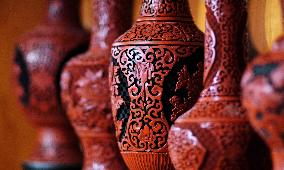
(240607) -- BEIJING, June 7, 2024 Photo by Xinhua/ABACAPRESS.COM) -- Carved lacquer artworks are displayed at Zhu Jiang's studio in Beijing, capital of China, June 5, 2024. Carved lacquer, dating back to the Tang Dynasty (618-907), greeted its peak time in Ming and Qing dynasties (1368-1911). Since the founding of the People's Republic of China in 1949, Beijing and Yangzhou have become the two centers for the craft of carved lacquer, which was listed as a national-level intangible cultural heritage in 2006. Carved lacquer differs in its colors, namely red, black or multiple colors. Its making procedures include designing, body shaping, lacquer making, coating, drawing, carving and grinding. The craftsman needs to smoothly use various kinds of knives to carve patterns on the ware, and even a little miss can destroy the whole artwork. The craft can only be grasped through three to five years of practice. Therefore, it is also called "the art of time." Born in 1976, Zhu Jiang, an inheritor of the craft of carved

  •  
(MASTER OF CRAFTS)CHINA-CARVED LACQUER-INHERITOR-STUDIO (CN)

(MASTER OF CRAFTS)CHINA-CARVED LACQUER-INHERITOR-STUDIO (CN)

(240607) -- BEIJING, June 7, 2024 Photo by Xinhua/ABACAPRESS.COM) -- Carved lacquer artworks are displayed at Zhu Jiang's studio in Beijing, capital of China, June 5, 2024. Carved lacquer, dating back to the Tang Dynasty (618-907), greeted its peak time in Ming and Qing dynasties (1368-1911). Since the founding of the People's Republic of China in 1949, Beijing and Yangzhou have become the two centers for the craft of carved lacquer, which was listed as a national-level intangible cultural heritage in 2006. Carved lacquer differs in its colors, namely red, black or multiple colors. Its making procedures include designing, body shaping, lacquer making, coating, drawing, carving and grinding. The craftsman needs to smoothly use various kinds of knives to carve patterns on the ware, and even a little miss can destroy the whole artwork. The craft can only be grasped through three to five years of practice. Therefore, it is also called "the art of time." Born in 1976, Zhu Jiang, an inheritor of the craft of carved

  •  
(MASTER OF CRAFTS)CHINA-CARVED LACQUER-INHERITOR-STUDIO (CN)

(MASTER OF CRAFTS)CHINA-CARVED LACQUER-INHERITOR-STUDIO (CN)

(240607) -- BEIJING, June 7, 2024 Photo by Xinhua/ABACAPRESS.COM) -- Carved lacquer artworks are displayed at Zhu Jiang's studio in Gu'an, north China's Hebei Province, May 30, 2024. Carved lacquer, dating back to the Tang Dynasty (618-907), greeted its peak time in Ming and Qing dynasties (1368-1911). Since the founding of the People's Republic of China in 1949, Beijing and Yangzhou have become the two centers for the craft of carved lacquer, which was listed as a national-level intangible cultural heritage in 2006. Carved lacquer differs in its colors, namely red, black or multiple colors. Its making procedures include designing, body shaping, lacquer making, coating, drawing, carving and grinding. The craftsman needs to smoothly use various kinds of knives to carve patterns on the ware, and even a little miss can destroy the whole artwork. The craft can only be grasped through three to five years of practice. Therefore, it is also called "the art of time." Born in 1976, Zhu Jiang, an inheritor of the craft

  •  
(MASTER OF CRAFTS)CHINA-CARVED LACQUER-INHERITOR-STUDIO (CN)

(MASTER OF CRAFTS)CHINA-CARVED LACQUER-INHERITOR-STUDIO (CN)

(240607) -- BEIJING, June 7, 2024 Photo by Xinhua/ABACAPRESS.COM) -- Zhu Jiang makes carved lacquer at his studio in Gu'an, north China's Hebei Province, May 30, 2024. Carved lacquer, dating back to the Tang Dynasty (618-907), greeted its peak time in Ming and Qing dynasties (1368-1911). Since the founding of the People's Republic of China in 1949, Beijing and Yangzhou have become the two centers for the craft of carved lacquer, which was listed as a national-level intangible cultural heritage in 2006. Carved lacquer differs in its colors, namely red, black or multiple colors. Its making procedures include designing, body shaping, lacquer making, coating, drawing, carving and grinding. The craftsman needs to smoothly use various kinds of knives to carve patterns on the ware, and even a little miss can destroy the whole artwork. The craft can only be grasped through three to five years of practice. Therefore, it is also called "the art of time." Born in 1976, Zhu Jiang, an inheritor of the craft of carved lacq

  •  
(MASTER OF CRAFTS)CHINA-CARVED LACQUER-INHERITOR-STUDIO (CN)

(MASTER OF CRAFTS)CHINA-CARVED LACQUER-INHERITOR-STUDIO (CN)

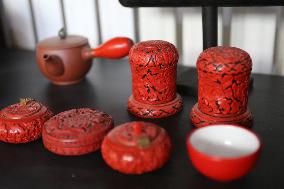
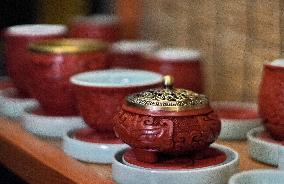
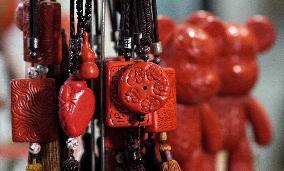
(240607) -- BEIJING, June 7, 2024 Photo by Xinhua/ABACAPRESS.COM) -- Accessories with carved lacquer are displayed at Zhu Jiang's studio in Beijing, capital of China, June 5, 2024. Carved lacquer, dating back to the Tang Dynasty (618-907), greeted its peak time in Ming and Qing dynasties (1368-1911). Since the founding of the People's Republic of China in 1949, Beijing and Yangzhou have become the two centers for the craft of carved lacquer, which was listed as a national-level intangible cultural heritage in 2006. Carved lacquer differs in its colors, namely red, black or multiple colors. Its making procedures include designing, body shaping, lacquer making, coating, drawing, carving and grinding. The craftsman needs to smoothly use various kinds of knives to carve patterns on the ware, and even a little miss can destroy the whole artwork. The craft can only be grasped through three to five years of practice. Therefore, it is also called "the art of time." Born in 1976, Zhu Jiang, an inheritor of the craft o

  •  
(MASTER OF CRAFTS)CHINA-CARVED LACQUER-INHERITOR-STUDIO (CN)

(MASTER OF CRAFTS)CHINA-CARVED LACQUER-INHERITOR-STUDIO (CN)

(240607) -- BEIJING, June 7, 2024 Photo by Xinhua/ABACAPRESS.COM) -- Carved lacquer artworks are displayed at Zhu Jiang's studio in Gu'an, north China's Hebei Province, May 30, 2024. Carved lacquer, dating back to the Tang Dynasty (618-907), greeted its peak time in Ming and Qing dynasties (1368-1911). Since the founding of the People's Republic of China in 1949, Beijing and Yangzhou have become the two centers for the craft of carved lacquer, which was listed as a national-level intangible cultural heritage in 2006. Carved lacquer differs in its colors, namely red, black or multiple colors. Its making procedures include designing, body shaping, lacquer making, coating, drawing, carving and grinding. The craftsman needs to smoothly use various kinds of knives to carve patterns on the ware, and even a little miss can destroy the whole artwork. The craft can only be grasped through three to five years of practice. Therefore, it is also called "the art of time." Born in 1976, Zhu Jiang, an inheritor of the craft

  •  
(MASTER OF CRAFTS)CHINA-CARVED LACQUER-INHERITOR-STUDIO (CN)

(MASTER OF CRAFTS)CHINA-CARVED LACQUER-INHERITOR-STUDIO (CN)

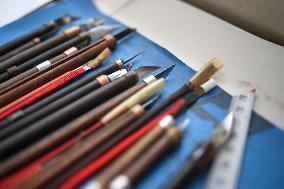
(240607) -- BEIJING, June 7, 2024 Photo by Xinhua/ABACAPRESS.COM) -- Knives for making carved lacquer are seen at Zhu Jiang's studio in Gu'an, north China's Hebei Province, May 30, 2024. Carved lacquer, dating back to the Tang Dynasty (618-907), greeted its peak time in Ming and Qing dynasties (1368-1911). Since the founding of the People's Republic of China in 1949, Beijing and Yangzhou have become the two centers for the craft of carved lacquer, which was listed as a national-level intangible cultural heritage in 2006. Carved lacquer differs in its colors, namely red, black or multiple colors. Its making procedures include designing, body shaping, lacquer making, coating, drawing, carving and grinding. The craftsman needs to smoothly use various kinds of knives to carve patterns on the ware, and even a little miss can destroy the whole artwork. The craft can only be grasped through three to five years of practice. Therefore, it is also called "the art of time." Born in 1976, Zhu Jiang, an inheritor of the c

  •  
(MASTER OF CRAFTS)CHINA-CARVED LACQUER-INHERITOR-STUDIO (CN)

(MASTER OF CRAFTS)CHINA-CARVED LACQUER-INHERITOR-STUDIO (CN)

(240607) -- BEIJING, June 7, 2024 Photo by Xinhua/ABACAPRESS.COM) -- Zhu Qingyuan, father of Zhujiang, shows a piece of semi-finished carved lacquer artwork at Zhu Jiang's studio in Gu'an, north China's Hebei Province, May 30, 2024. Carved lacquer, dating back to the Tang Dynasty (618-907), greeted its peak time in Ming and Qing dynasties (1368-1911). Since the founding of the People's Republic of China in 1949, Beijing and Yangzhou have become the two centers for the craft of carved lacquer, which was listed as a national-level intangible cultural heritage in 2006. Carved lacquer differs in its colors, namely red, black or multiple colors. Its making procedures include designing, body shaping, lacquer making, coating, drawing, carving and grinding. The craftsman needs to smoothly use various kinds of knives to carve patterns on the ware, and even a little miss can destroy the whole artwork. The craft can only be grasped through three to five years of practice. Therefore, it is also called "the art of time."

  •  
(MASTER OF CRAFTS)CHINA-CARVED LACQUER-INHERITOR-STUDIO (CN)

(MASTER OF CRAFTS)CHINA-CARVED LACQUER-INHERITOR-STUDIO (CN)

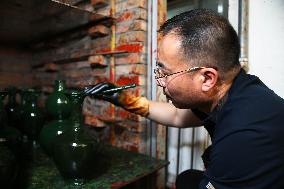
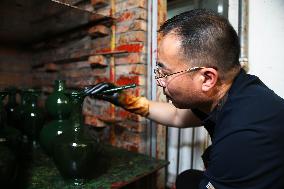
(240607) -- BEIJING, June 7, 2024 Photo by Xinhua/ABACAPRESS.COM) -- Zhu Jiang checks semi-finished carved lacquer wares at his studio in Gu'an, north China's Hebei Province, May 30, 2024. Carved lacquer, dating back to the Tang Dynasty (618-907), greeted its peak time in Ming and Qing dynasties (1368-1911). Since the founding of the People's Republic of China in 1949, Beijing and Yangzhou have become the two centers for the craft of carved lacquer, which was listed as a national-level intangible cultural heritage in 2006. Carved lacquer differs in its colors, namely red, black or multiple colors. Its making procedures include designing, body shaping, lacquer making, coating, drawing, carving and grinding. The craftsman needs to smoothly use various kinds of knives to carve patterns on the ware, and even a little miss can destroy the whole artwork. The craft can only be grasped through three to five years of practice. Therefore, it is also called "the art of time." Born in 1976, Zhu Jiang, an inheritor of the

  •  
(MASTER OF CRAFTS)CHINA-CARVED LACQUER-INHERITOR-STUDIO (CN)

(MASTER OF CRAFTS)CHINA-CARVED LACQUER-INHERITOR-STUDIO (CN)

(240607) -- BEIJING, June 7, 2024 Photo by Xinhua/ABACAPRESS.COM) -- Carved lacquer artworks are displayed at Zhu Jiang's studio in Beijing, capital of China, June 5, 2024. Carved lacquer, dating back to the Tang Dynasty (618-907), greeted its peak time in Ming and Qing dynasties (1368-1911). Since the founding of the People's Republic of China in 1949, Beijing and Yangzhou have become the two centers for the craft of carved lacquer, which was listed as a national-level intangible cultural heritage in 2006. Carved lacquer differs in its colors, namely red, black or multiple colors. Its making procedures include designing, body shaping, lacquer making, coating, drawing, carving and grinding. The craftsman needs to smoothly use various kinds of knives to carve patterns on the ware, and even a little miss can destroy the whole artwork. The craft can only be grasped through three to five years of practice. Therefore, it is also called "the art of time." Born in 1976, Zhu Jiang, an inheritor of the craft of carved

  •  
(MASTER OF CRAFTS)CHINA-CARVED LACQUER-INHERITOR-STUDIO (CN)

(MASTER OF CRAFTS)CHINA-CARVED LACQUER-INHERITOR-STUDIO (CN)

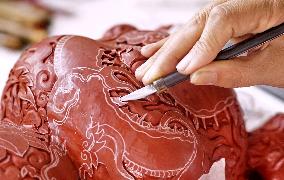
(240607) -- BEIJING, June 7, 2024 Photo by Xinhua/ABACAPRESS.COM) -- Zhu Jiang draws lines on a semi-finished carved lacquer ware at his studio in Beijing, capital of China, June 5, 2024. Carved lacquer, dating back to the Tang Dynasty (618-907), greeted its peak time in Ming and Qing dynasties (1368-1911). Since the founding of the People's Republic of China in 1949, Beijing and Yangzhou have become the two centers for the craft of carved lacquer, which was listed as a national-level intangible cultural heritage in 2006. Carved lacquer differs in its colors, namely red, black or multiple colors. Its making procedures include designing, body shaping, lacquer making, coating, drawing, carving and grinding. The craftsman needs to smoothly use various kinds of knives to carve patterns on the ware, and even a little miss can destroy the whole artwork. The craft can only be grasped through three to five years of practice. Therefore, it is also called "the art of time." Born in 1976, Zhu Jiang, an inheritor of the

  •  
(MASTER OF CRAFTS)CHINA-CARVED LACQUER-INHERITOR-STUDIO (CN)

(MASTER OF CRAFTS)CHINA-CARVED LACQUER-INHERITOR-STUDIO (CN)

(240607) -- BEIJING, June 7, 2024 Photo by Xinhua/ABACAPRESS.COM) -- Carved lacquer artworks are displayed at Zhu Jiang's studio in Beijing, capital of China, June 5, 2024. Carved lacquer, dating back to the Tang Dynasty (618-907), greeted its peak time in Ming and Qing dynasties (1368-1911). Since the founding of the People's Republic of China in 1949, Beijing and Yangzhou have become the two centers for the craft of carved lacquer, which was listed as a national-level intangible cultural heritage in 2006. Carved lacquer differs in its colors, namely red, black or multiple colors. Its making procedures include designing, body shaping, lacquer making, coating, drawing, carving and grinding. The craftsman needs to smoothly use various kinds of knives to carve patterns on the ware, and even a little miss can destroy the whole artwork. The craft can only be grasped through three to five years of practice. Therefore, it is also called "the art of time." Born in 1976, Zhu Jiang, an inheritor of the craft of carved

  •  
(MASTER OF CRAFTS)CHINA-CARVED LACQUER-INHERITOR-STUDIO (CN)

(MASTER OF CRAFTS)CHINA-CARVED LACQUER-INHERITOR-STUDIO (CN)

(240607) -- BEIJING, June 7, 2024 Photo by Xinhua/ABACAPRESS.COM) -- Zhu Jiang makes carved lacquer at his studio in Gu'an, north China's Hebei Province, May 30, 2024. Carved lacquer, dating back to the Tang Dynasty (618-907), greeted its peak time in Ming and Qing dynasties (1368-1911). Since the founding of the People's Republic of China in 1949, Beijing and Yangzhou have become the two centers for the craft of carved lacquer, which was listed as a national-level intangible cultural heritage in 2006. Carved lacquer differs in its colors, namely red, black or multiple colors. Its making procedures include designing, body shaping, lacquer making, coating, drawing, carving and grinding. The craftsman needs to smoothly use various kinds of knives to carve patterns on the ware, and even a little miss can destroy the whole artwork. The craft can only be grasped through three to five years of practice. Therefore, it is also called "the art of time." Born in 1976, Zhu Jiang, an inheritor of the craft of carved lacq

  •  
(MASTER OF CRAFTS)CHINA-CARVED LACQUER-INHERITOR-STUDIO (CN)

(MASTER OF CRAFTS)CHINA-CARVED LACQUER-INHERITOR-STUDIO (CN)

(240607) -- BEIJING, June 7, 2024 Photo by Xinhua/ABACAPRESS.COM) -- Zhu Qingyuan, father of Zhu Jiang, makes carved lacquer at Zhu Jiang's studio in Gu'an, north China's Hebei Province, May 30, 2024. Carved lacquer, dating back to the Tang Dynasty (618-907), greeted its peak time in Ming and Qing dynasties (1368-1911). Since the founding of the People's Republic of China in 1949, Beijing and Yangzhou have become the two centers for the craft of carved lacquer, which was listed as a national-level intangible cultural heritage in 2006. Carved lacquer differs in its colors, namely red, black or multiple colors. Its making procedures include designing, body shaping, lacquer making, coating, drawing, carving and grinding. The craftsman needs to smoothly use various kinds of knives to carve patterns on the ware, and even a little miss can destroy the whole artwork. The craft can only be grasped through three to five years of practice. Therefore, it is also called "the art of time." Born in 1976, Zhu Jiang, an inhe

  •  
(MASTER OF CRAFTS)CHINA-CARVED LACQUER-INHERITOR-STUDIO (CN)

(MASTER OF CRAFTS)CHINA-CARVED LACQUER-INHERITOR-STUDIO (CN)

(240607) -- BEIJING, June 7, 2024 Photo by Xinhua/ABACAPRESS.COM) -- Zhu Jiang (R) and his father Zhu Qingyuan discuss lacquer coating at Zhu Jiang's studio in Gu'an, north China's Hebei Province, May 30, 2024. Carved lacquer, dating back to the Tang Dynasty (618-907), greeted its peak time in Ming and Qing dynasties (1368-1911). Since the founding of the People's Republic of China in 1949, Beijing and Yangzhou have become the two centers for the craft of carved lacquer, which was listed as a national-level intangible cultural heritage in 2006. Carved lacquer differs in its colors, namely red, black or multiple colors. Its making procedures include designing, body shaping, lacquer making, coating, drawing, carving and grinding. The craftsman needs to smoothly use various kinds of knives to carve patterns on the ware, and even a little miss can destroy the whole artwork. The craft can only be grasped through three to five years of practice. Therefore, it is also called "the art of time." Born in 1976, Zhu Jian

  •  
(MASTER OF CRAFTS)CHINA-CARVED LACQUER-INHERITOR-STUDIO (CN)

(MASTER OF CRAFTS)CHINA-CARVED LACQUER-INHERITOR-STUDIO (CN)

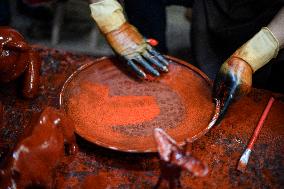
(240607) -- BEIJING, June 7, 2024 Photo by Xinhua/ABACAPRESS.COM) -- Zhu Jiang coats lacquer onto a plate at his studio in Gu'an, north China's Hebei Province, May 30, 2024. Carved lacquer, dating back to the Tang Dynasty (618-907), greeted its peak time in Ming and Qing dynasties (1368-1911). Since the founding of the People's Republic of China in 1949, Beijing and Yangzhou have become the two centers for the craft of carved lacquer, which was listed as a national-level intangible cultural heritage in 2006. Carved lacquer differs in its colors, namely red, black or multiple colors. Its making procedures include designing, body shaping, lacquer making, coating, drawing, carving and grinding. The craftsman needs to smoothly use various kinds of knives to carve patterns on the ware, and even a little miss can destroy the whole artwork. The craft can only be grasped through three to five years of practice. Therefore, it is also called "the art of time." Born in 1976, Zhu Jiang, an inheritor of the craft of carve

  •  
(MASTER OF CRAFTS)CHINA-CARVED LACQUER-INHERITOR-STUDIO (CN)

(MASTER OF CRAFTS)CHINA-CARVED LACQUER-INHERITOR-STUDIO (CN)

(240607) -- BEIJING, June 7, 2024 (Xinhua) -- Carved lacquer artworks are displayed at Zhu Jiang's studio in Gu'an, north China's Hebei Province, May 30, 2024. Carved lacquer, dating back to the Tang Dynasty (618-907), greeted its peak time in Ming and Qing dynasties (1368-1911). Since the founding of the People's Republic of China in 1949, Beijing and Yangzhou have become the two centers for the craft of carved lacquer, which was listed as a national-level intangible cultural heritage in 2006. Carved lacquer differs in its colors, namely red, black or multiple colors. Its making procedures include designing, body shaping, lacquer making, coating, drawing, carving and grinding. The craftsman needs to smoothly use various kinds of knives to carve patterns on the ware, and even a little miss can destroy the whole artwork. The craft can only be grasped through three to five years of practice. Therefore, it is also called "the art of time." Born in 1976, Zhu Jiang, an inheritor of the craft of carved lacque

  •  
(MASTER OF CRAFTS)CHINA-CARVED LACQUER-INHERITOR-STUDIO (CN)

(MASTER OF CRAFTS)CHINA-CARVED LACQUER-INHERITOR-STUDIO (CN)

(240607) -- BEIJING, June 7, 2024 (Xinhua) -- Zhu Jiang checks semi-finished carved lacquer wares at his studio in Gu'an, north China's Hebei Province, May 30, 2024. Carved lacquer, dating back to the Tang Dynasty (618-907), greeted its peak time in Ming and Qing dynasties (1368-1911). Since the founding of the People's Republic of China in 1949, Beijing and Yangzhou have become the two centers for the craft of carved lacquer, which was listed as a national-level intangible cultural heritage in 2006. Carved lacquer differs in its colors, namely red, black or multiple colors. Its making procedures include designing, body shaping, lacquer making, coating, drawing, carving and grinding. The craftsman needs to smoothly use various kinds of knives to carve patterns on the ware, and even a little miss can destroy the whole artwork. The craft can only be grasped through three to five years of practice. Therefore, it is also called "the art of time." Born in 1976, Zhu Jiang, an inheritor of the craft of carved

  •  
(MASTER OF CRAFTS)CHINA-CARVED LACQUER-INHERITOR-STUDIO (CN)

(MASTER OF CRAFTS)CHINA-CARVED LACQUER-INHERITOR-STUDIO (CN)

(240607) -- BEIJING, June 7, 2024 (Xinhua) -- Zhu Jiang designs a piece of carved lacquer artwork at his studio in Beijing, capital of China, June 5, 2024. Carved lacquer, dating back to the Tang Dynasty (618-907), greeted its peak time in Ming and Qing dynasties (1368-1911). Since the founding of the People's Republic of China in 1949, Beijing and Yangzhou have become the two centers for the craft of carved lacquer, which was listed as a national-level intangible cultural heritage in 2006. Carved lacquer differs in its colors, namely red, black or multiple colors. Its making procedures include designing, body shaping, lacquer making, coating, drawing, carving and grinding. The craftsman needs to smoothly use various kinds of knives to carve patterns on the ware, and even a little miss can destroy the whole artwork. The craft can only be grasped through three to five years of practice. Therefore, it is also called "the art of time." Born in 1976, Zhu Jiang, an inheritor of the craft of carved lacquer, l

  •  
(MASTER OF CRAFTS)CHINA-CARVED LACQUER-INHERITOR-STUDIO (CN)

(MASTER OF CRAFTS)CHINA-CARVED LACQUER-INHERITOR-STUDIO (CN)

(240607) -- BEIJING, June 7, 2024 (Xinhua) -- Zhu Jiang (L) and his father carry semi-finished carved lacquer wares for drying at his studio in Gu'an, north China's Hebei Province, May 30, 2024. Carved lacquer, dating back to the Tang Dynasty (618-907), greeted its peak time in Ming and Qing dynasties (1368-1911). Since the founding of the People's Republic of China in 1949, Beijing and Yangzhou have become the two centers for the craft of carved lacquer, which was listed as a national-level intangible cultural heritage in 2006. Carved lacquer differs in its colors, namely red, black or multiple colors. Its making procedures include designing, body shaping, lacquer making, coating, drawing, carving and grinding. The craftsman needs to smoothly use various kinds of knives to carve patterns on the ware, and even a little miss can destroy the whole artwork. The craft can only be grasped through three to five years of practice. Therefore, it is also called "the art of time." Born in 1976, Zhu Jiang, an inhe

  •  
(MASTER OF CRAFTS)CHINA-CARVED LACQUER-INHERITOR-STUDIO (CN)

(MASTER OF CRAFTS)CHINA-CARVED LACQUER-INHERITOR-STUDIO (CN)

(240607) -- BEIJING, June 7, 2024 (Xinhua) -- Carved lacquer artworks are displayed at Zhu Jiang's studio in Beijing, capital of China, June 5, 2024. Carved lacquer, dating back to the Tang Dynasty (618-907), greeted its peak time in Ming and Qing dynasties (1368-1911). Since the founding of the People's Republic of China in 1949, Beijing and Yangzhou have become the two centers for the craft of carved lacquer, which was listed as a national-level intangible cultural heritage in 2006. Carved lacquer differs in its colors, namely red, black or multiple colors. Its making procedures include designing, body shaping, lacquer making, coating, drawing, carving and grinding. The craftsman needs to smoothly use various kinds of knives to carve patterns on the ware, and even a little miss can destroy the whole artwork. The craft can only be grasped through three to five years of practice. Therefore, it is also called "the art of time." Born in 1976, Zhu Jiang, an inheritor of the craft of carved lacquer, learned

  •  
(MASTER OF CRAFTS)CHINA-CARVED LACQUER-INHERITOR-STUDIO (CN)

(MASTER OF CRAFTS)CHINA-CARVED LACQUER-INHERITOR-STUDIO (CN)

(240607) -- BEIJING, June 7, 2024 (Xinhua) -- Zhu Jiang reads a book on carved lacquer at his studio in Gu'an, north China's Hebei Province, May 30, 2024. Carved lacquer, dating back to the Tang Dynasty (618-907), greeted its peak time in Ming and Qing dynasties (1368-1911). Since the founding of the People's Republic of China in 1949, Beijing and Yangzhou have become the two centers for the craft of carved lacquer, which was listed as a national-level intangible cultural heritage in 2006. Carved lacquer differs in its colors, namely red, black or multiple colors. Its making procedures include designing, body shaping, lacquer making, coating, drawing, carving and grinding. The craftsman needs to smoothly use various kinds of knives to carve patterns on the ware, and even a little miss can destroy the whole artwork. The craft can only be grasped through three to five years of practice. Therefore, it is also called "the art of time." Born in 1976, Zhu Jiang, an inheritor of the craft of carved lacquer, le

  •  
(MASTER OF CRAFTS)CHINA-CARVED LACQUER-INHERITOR-STUDIO (CN)

(MASTER OF CRAFTS)CHINA-CARVED LACQUER-INHERITOR-STUDIO (CN)

(240607) -- BEIJING, June 7, 2024 (Xinhua) -- Carved lacquer artworks are displayed at Zhu Jiang's studio in Gu'an, north China's Hebei Province, May 30, 2024. Carved lacquer, dating back to the Tang Dynasty (618-907), greeted its peak time in Ming and Qing dynasties (1368-1911). Since the founding of the People's Republic of China in 1949, Beijing and Yangzhou have become the two centers for the craft of carved lacquer, which was listed as a national-level intangible cultural heritage in 2006. Carved lacquer differs in its colors, namely red, black or multiple colors. Its making procedures include designing, body shaping, lacquer making, coating, drawing, carving and grinding. The craftsman needs to smoothly use various kinds of knives to carve patterns on the ware, and even a little miss can destroy the whole artwork. The craft can only be grasped through three to five years of practice. Therefore, it is also called "the art of time." Born in 1976, Zhu Jiang, an inheritor of the craft of carved lacque

  • Main
  • Top
  • Editorial
  • Creative
  • About Us
  • About ILG
  • Terms of use
  • Company
  • BEHIND
  • Price List
  • Single Plan
  • Monthly Plan
  • Services
  • Shooting
  • Rights Clearance
  • Support
  • FAQ
  • How To Buy
  • Contact Us
  • Become a Partner

© KYODO NEWS IMAGES INC

All Rights Reserved.

  • Editorial
  • Olympics
  • News
  • Sports
  • Japan
  • Tech
  • Royal
  • Disaster
  • NorthKorea
  • Old Japan
  • SNS
  • Creative
  • Food
  • Japan
  • Landscape
  • Animal
  • Popular
  • #Ukraine
  • #Thailand
  • #coronavirus
  • #N. Korea
  • #Russia
  • #China
  • #Ukraine
  • #Thailand
  • #coronavirus
  • #N. Korea
  • #Russia
  • #China
  • Food
  • Japan
  • Landscape
  • Animal
  • Olympics
  • News
  • Sports
  • Japan
  • Tech
  • Royal
  • Disaster
  • NorthKorea
  • Old Japan
  • SNS